

Credit risk directly impacts your company’s profitability and financial health. When risk increases, lenders charge higher interest rates to compensate for the greater chance of default. Risk is the potential that events, expected or unexpected, may have an adverse effect on a credit union’s net worth and earnings. Every product or service a credit union offers carries some risk of financial exposure or loss. The company’s credit risk exploded in October, driven by concerns about its ability to https://www.bookstime.com/ finance its capex needs in the face of insufficient cash flow generation.
- Lenders can recover a certain amount of the money through collateral or lawsuits, even in cases when a borrower defaults.
- The higher the credit risk, the higher the interest rate lenders typically charge to offset the risk of losing money on the loan.
- This can increase to100 per cent for specific products where additional security isprovided by a supporter of the applicant and held on deposit by theGroup.
- She is a financial therapist and transformational coach, with a special interest in helping women learn how to invest.
- LGD represents the expected percentage of a loan that will be lost if a borrower defaults.
- The company’s credit risk exploded in October, driven by concerns about its ability to finance its capex needs in the face of insufficient cash flow generation.
Structuring, Negotiating and Documenting Junior Debt products (& Unitranche)
Akanksha is well-equipped to navigate the complexities of tax, estate, investment, wealth, and retirement planning. Her focused and goal-oriented approach and hunger to keep improvising make her a one-of-a-kind purposeful advisor. Erika Rasure is globally-recognized as a leading consumer economics subject matter expert, researcher, and educator.

What is credit risk analysis?
- Banking crises, often triggered by waves of defaults, revealed that credit risk could propagate through the financial system and cause large-scale economic disruption.
- For businesses, this is especially important when it comes to extending trade credit to customers or working with suppliers.
- Ratan Priya is an accomplished Certified Private Wealth Manager and Senior Team Lead at Fincart, possessing over a good number of years of experience in wealth management.
- The risk of losing investments because of either political or economic issues in the country of the borrower.
- This includes ensuring that the controland monitoring of higher risk and vulnerable portfolios and sectors isappropriate and confirming that appropriate loss allowances forimpairment are in place.
- Default risk influences almost all credit transactions—securities, bonds, loans, and derivatives.
- To achieve this, lenders use a range of mitigation strategies, tools, and technology.
Investors and banks also rely on credit risk assessments to decide whether bonds, stocks, and other investments are likely to default. By using Creditsafe’s business credit reports, businesses can get insights into the financial stability of their customers and partners, ensuring they make well-informed credit decisions and avoid risky transactions. These reports provide a full picture of a company’s credit score, payment history, and financial data—key pieces of information for managing credit risk.
The 5 Cs of credit risk: A framework for risk analysis
Perhaps a borrower will be required to provide more frequent (or more robust) financial reporting. But soon, the company experiences operational difficulties—resulting in a liquidity crunch. Your reporting framework should provide timely, accurate information to drive better decisions. Capital Com Online Investments Ltd is a limited liability company with company number B. Capital Com Online Investments Ltd is a Company registered in the Commonwealth of The Bahamas and authorised by the Securities Commission of The Bahamas with license number SIA-F245.
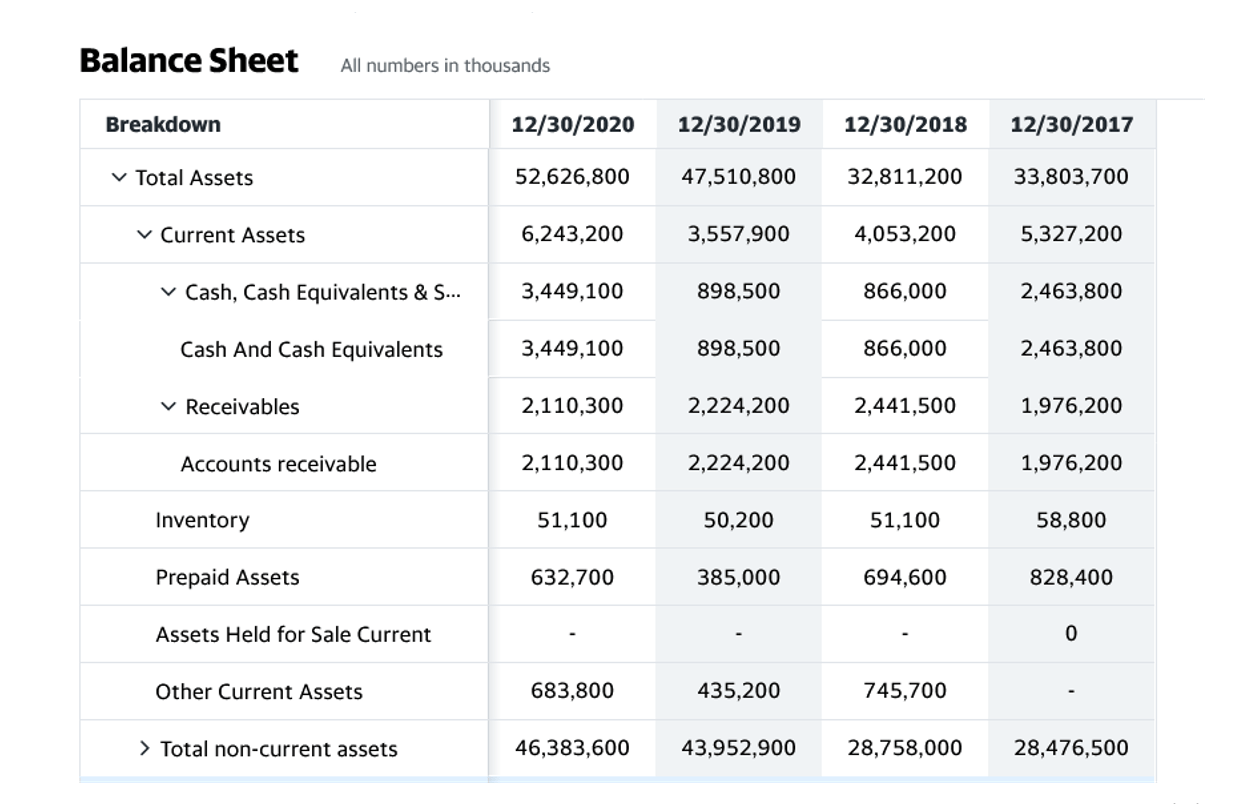
Credit risk of a particular debt issue can be different than the overall credit risk of the issuer. Credit Default Risk is a case of financial risk which arises when the borrower is unable to pay back the loan amount. Liability Accounts Credit risk considerations are assessed right from the outset of project appraisal.
In essence, investing in the bond issue of Company B is a more risky investment when compared to Company A, as the chances of default by Company B are perceived to be higher. Consequently, Company B has to offer higher interest rates to potential investors than Company A to compensate for this additional risk. This is shown in the example below – US Treasuries (for example, the 3-month Treasury) are considered as virtually risk-free securities. Alongside these strategies, many institutions rely on specialized tools and software to track, assess, and manage credit risk. List all outstanding loans or credit exposures and estimate their market value.
- To calculate credit risk exposure, lenders check credit scores, income, and repayment history to estimate default probability.
- To manage credit risk, start by checking a borrower’s repayment history and credit score.
- Strategies include monitoring and understanding what proportion of the total loan book is a particular type of credit or what proportion of total borrowers are a certain risk score.
- Supervisory expectations for the credit risk management approach used by individual banks should be commensurate with the scope and sophistication of the bank’s activities.
- For statutes, regulations, and guidance referenced in this booklet, consult those sources to determine applicability to federal savings associations.
- To determine the right amount that can be lent to a borrower, financial institutions use credit risk modeling.
- Credit risk is one of the financial world’s most important and challenging aspects.
Analysis
For commercial lenders, this is where understanding the borrower’s competitive advantage comes in – since its ability to maintain or grow this advantage will influence the borrower’s ability to generate cash flow in the future. The score itself ranks the likelihood that the borrower will trigger an event of default. The better the score/credit rating, the less likely the borrower is to default; the lower the score/rating, the more likely the borrower is to default. Based on the lender’s proprietary analysis techniques, models, and underwriting parameters more broadly, a borrower’s credit assessment will yield a score. Loans are extended to borrowers based on the business or the individual’s ability to service future payment obligations (of principal and interest). Banks provision for expected losses under the global accounting standard IFRS 9.
What is Credit Risk? Definition, Types, and Examples
The risk management process begins with estimating a borrower’s creditworthiness using credit scoring, financial analysis, and risk rating. Credit risk management in banks helps identify high-risk borrowers and adjust loan terms accordingly, or even decide not to lend. To calculate credit risk exposure, lenders check credit scores, income, and repayment history to estimate default probability. It is about meeting regulations, keeping investors confident, and running operations smoothly. Effective credit risk management keeps cash flowing, cuts bad loans, supports safe growth, and ensures compliance with RBI and Basel rules. Credit risk is the chance that the borrower will fail to repay the debt under the terms of their agreement.
- Character refers to the borrower’s reputation and track record of repaying debts.
- A debt with higher credit risk has higher yield and lower price and vice versa.
- By understanding a partner’s financial stability and payment behavior, businesses can make smarter decisions, protect their cash flow, and maintain financial stability.
- For example, if a bank lends most of its money to one company or industry, it faces concentration risk.
- These may include establishing credit limits, requesting collateral, charging higher interest rates to higher-risk borrowers, and regularly reviewing borrowers to identify risk early.
- However, high-risk or deteriorating accounts may require monthly or even weekly monitoring.
For example, if a bank lends most of its money to one company or industry, it faces concentration risk. Similarly, if an investor puts most of their portfolio in one type of bond or currency, they face concentration risk. Concentration risk can increase the impact of default risk or other credit risk definition types of credit risk.